This article is a radical critique of “digital feudalism,” exploring how tech giants have enclosed the internet to turn users into uncompensated data laborers.
It breaks down the scam of subscription-based software and algorithmic management, calling for a shift from corporate surveillance to community-owned digital commons.
If you feel like you’re being watched, it’s because you are. But it’s not some cinematic conspiracy; it’s just business as usual in 2026. The internet was supposed to be our great escape—a decentralized commons where information was free and the old hierarchies of the “boss class” couldn't reach us.
Instead, we’ve watched a handful of Silicon Valley giants build a digital fence around the entire human experience. We aren't “users” of the internet anymore; we are the involuntary laborers of the digital estate.
Every time you open an app, you’re essentially clocking in for a shift you never agreed to, producing data that someone else sells for a profit you’ll never see.
The Subscription Trap: You Own Nothing
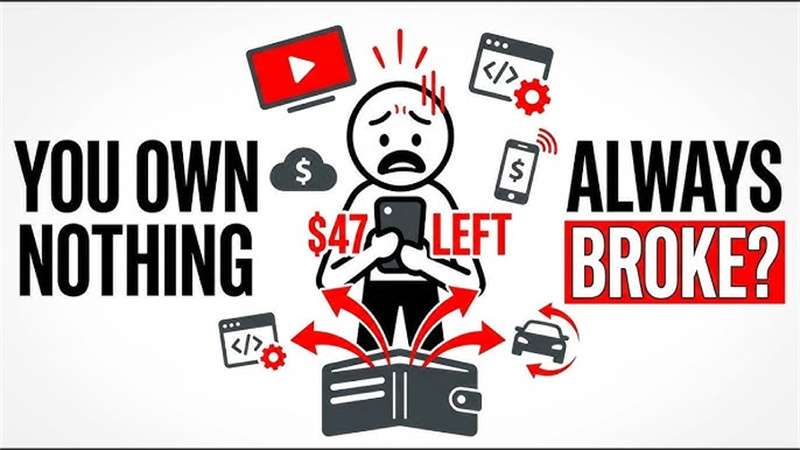
The biggest heist of the last decade wasn't a bank robbery; it was the death of ownership. We’ve been ushered into the age of “Software as a Service” (SaaS), which is really just a fancy term for digital sharecropping. You don’t own your word processor, your photo library, or even the operating system that runs your life. You rent them. The moment you stop paying the monthly tribute, your digital existence is evaporated.
This isn't just about money; it’s about power. By moving everything to the “cloud”—which is really just someone else’s computer—corporations have ensured that we can never truly be independent. They control the tools of our trade, the archives of our memories, and the channels of our communication.
They can change the rules, raise the prices, or delete your access on a whim. It’s a return to the “company store” model, where you spend your wages just to keep the tools you need to keep working.
The Algorithmic Grind and the Search for a Wildcard
The modern workplace is no longer a physical building; it’s a set of metrics. Software today isn't designed to help you work; it’s designed to manage you. From “productivity trackers” to “activity heatmaps,” we are being squeezed by algorithms that don't understand human fatigue. This creates a deep, soul-crushing boredom—a world where everything is predicted, optimized, and drained of color.
When the “real” economy is this rigid and deterministic, people naturally crave a wildcard. We want something that hasn't been pre-calculated by an HR department. This is why the digital world is seeing a massive shift toward spaces that offer a genuine thrill.
For a worker who spends all day being “optimized” into a state of exhaustion, platforms like Azurslot offer something the corporate world never will: a moment where the outcome isn't rigged by a middle manager. It’s a space of pure chance in a world of forced certainty.
When the global economy is already gambling with our healthcare and our housing, taking a seat at a digital table isn't “reckless”—it’s a way to reclaim the excitement of a win that is entirely your own. It’s a spark of life in a digital landscape that has become a gray, predictable grind.
Digital Solidarity vs. Algorithmic Isolation
The tech elite love a lonely worker. Their software is built to keep us in “filter bubbles” where we only see what makes us angry or envious of our neighbors. They’ve successfully privatized the “public square” and turned it into a series of echo chambers designed to keep us from talking to each other about the things that actually matter—like why the CEO’s bonus is bigger than the GDP of a small country while we can’t afford a dental bill.
Social media doesn't connect people; it commodifies connection. It turns our friendships into data points and our outrage into ad revenue. By keeping us isolated and fighting over the “content” they feed us, they ensure we never look up long enough to notice that the wealth we create is being siphoned off into offshore server farms. A fragmented class is a powerless class, and Silicon Valley has coded that powerlessness into every “like” button.
The Myth of Digital Meritocracy
The tech elite loves to pedal the myth of the “meritocratic” internet, where anyone with a laptop and a dream can become the next titan of industry. But look at the landscape: the gates are locked. The software we rely on is designed to favor established capital, making it nearly impossible for grassroots innovation to breathe without being swallowed by a conglomerate.
This “innovate or die” narrative is just another way to keep workers in a state of perpetual anxiety, chasing a digital carrot that is moved every time we get close. True innovation shouldn't require selling your soul to a venture capital firm; it should be a collective endeavor that improves the lives of the many, not the bank accounts of the few.
Reclaiming the Digital Commons
The digital enclosure is only as strong as our willingness to accept its terms of service. Every “disruption” sold to us by a hoodie-wearing CEO is just another way to turn a basic human need into a subscription model. But beneath the polished interfaces and the predatory tracking, the internet still holds the potential for radical, unmediated connection.
If we stop waiting for a billionaire to “save” the web and start investing our energy into tools that are local, open, and owned by the community, we can break the cycle of extraction. The future isn't a pre-packaged app; it’s a living network that we build with our own hands, for our own benefit, and on our own terms.
