
Decodo is one of the few proxy brands that still gets my attention even after a name change. If you knew the company as Smartproxy, the important thing to understand is that this is not a completely new merchant pretending to have history. It is the same core proxy line under a newer brand identity, and in this review I wanted to answer a practical question: does Decodo still deserve a top-tier place in the self-serve proxy market in 2026?
After reviewing the current Decodo product pages, pricing surfaces, network positioning, session options, and companion tools, my answer is yes. I do not think Decodo is the perfect choice for every buyer, and I would not call it the absolute cheapest option in every category, but I do think it remains one of the better-balanced proxy platforms for people who want a serious residential product, credible mobile coverage, a usable datacenter lane, and enough operational polish to avoid constant friction.
What makes Decodo interesting to me is not just raw network size. It is the mix of range and usability. Plenty of providers can advertise a giant IP pool. Fewer providers make it reasonably clear which product you should buy, how the pricing ladder works, and what kind of workflow the platform is actually built for. Decodo still looks stronger than average on that front.
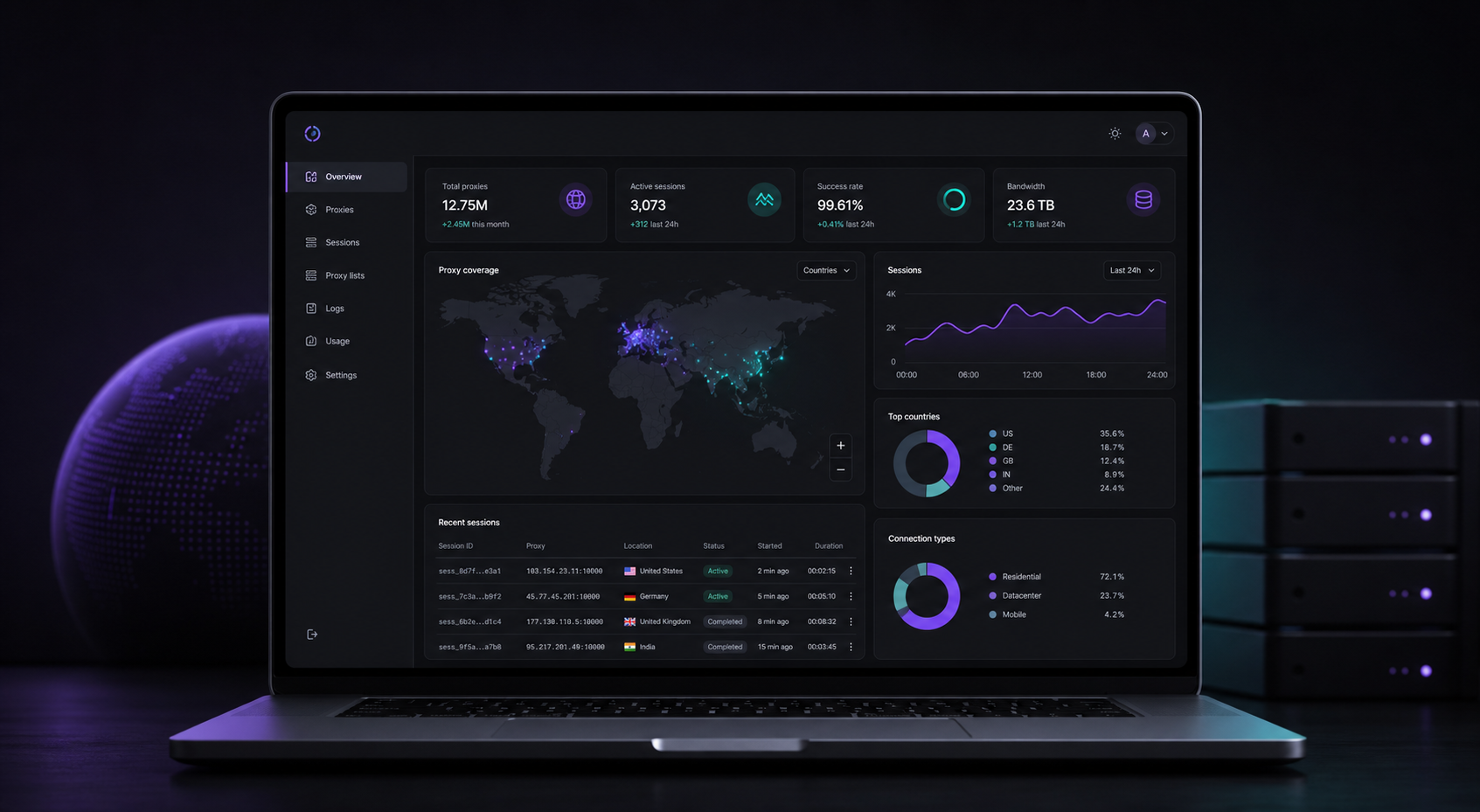
Decodo at a Glance
| Brand continuity | Decodo is the current brand name for the former Smartproxy product family. |
|---|---|
| Best fit | Buyers who want a self-serve proxy platform with strong residential depth and credible multi-product coverage. |
| Main products | Residential, mobile, datacenter, and ISP proxies, plus scraping-related tooling. |
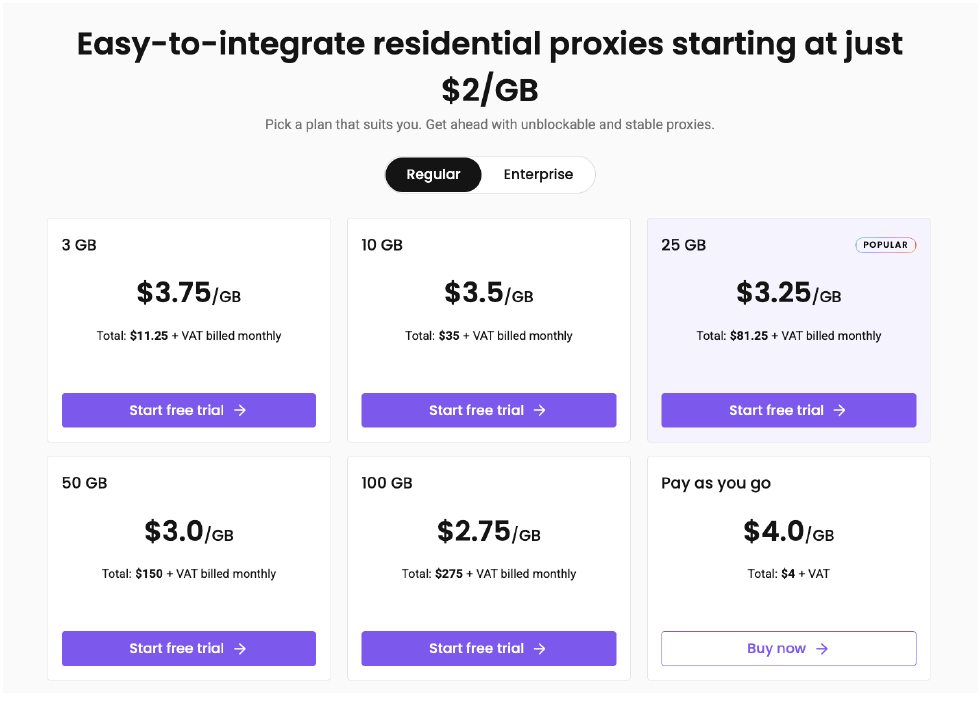
| Residential entry point | I reviewed residential pricing that ranged from pay-as-you-go at $4/GB down to $2.75/GB on larger monthly tiers. |
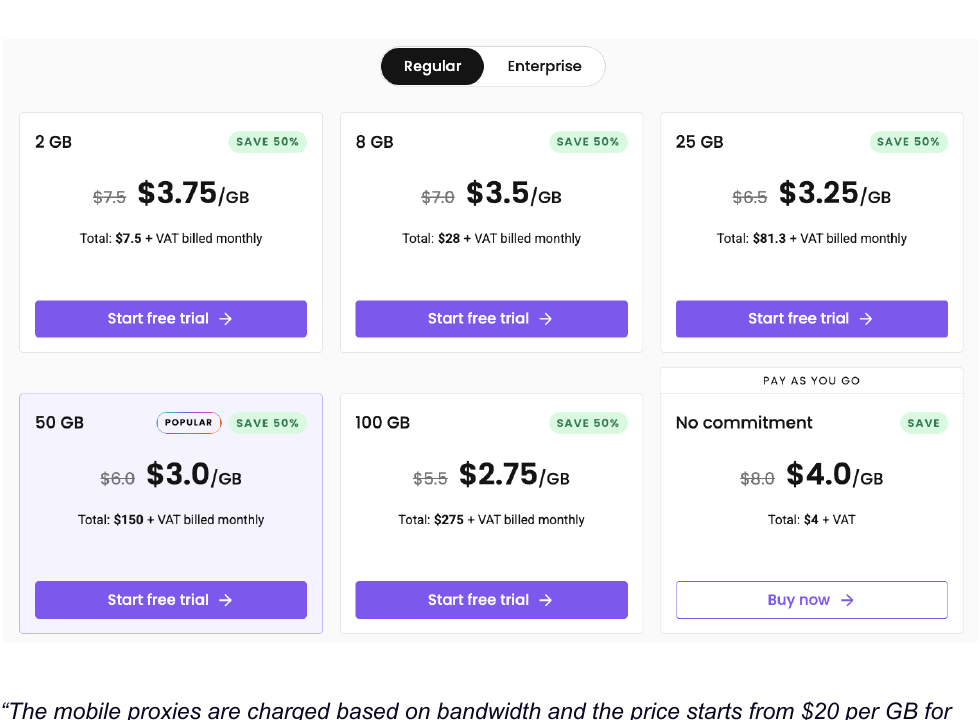
| Mobile entry point | The pricing surfaces I reviewed showed mobile plans starting at 2 GB for $7.50 total and pay-as-you-go at $4/GB. |
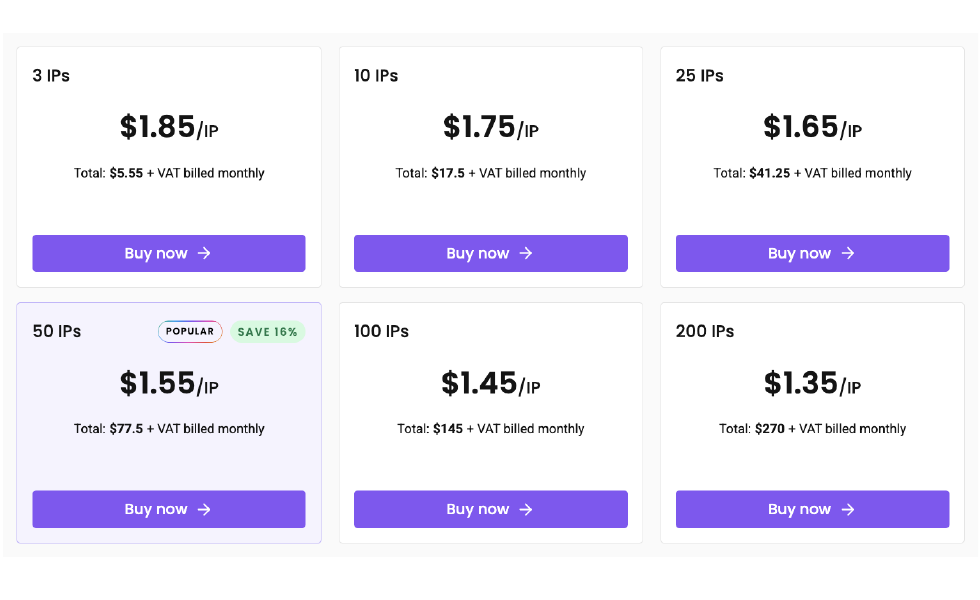
| Datacenter entry point | The current datacenter image set I reviewed started at $1.85 per IP for a 3-IP pack. |
| What I like most | The residential product remains strong, and the account-level ecosystem around it still feels mature. |
| Main caution | Decodo is polished, but promo-heavy pricing means I always recheck the exact landing page before buying. |
If I had to summarize my view in one sentence, it would be this: Decodo is still one of the best options for people who care more about overall platform quality than chasing the absolute lowest advertised number on a pricing page.
What Changed After the Smartproxy Rebrand
I pay attention to rebrands because they often hide one of two bad outcomes. Either the company is trying to run away from weak history, or the brand change creates confusion that makes the buying experience worse. In Decodo's case, I do not think either problem dominates. The Smartproxy-to-Decodo transition still requires explanation because many buyers continue to search for Smartproxy, but the underlying product line is recognizable and the merchant continuity is real.
That matters because older reviews and affiliate pages still talk about Smartproxy as if it were a separate current option. In practice, I treat that older Smartproxy reputation as part of Decodo's operating history. When I look at Decodo in 2026, I am not evaluating a brand-new entrant. I am evaluating an established self-serve proxy vendor that changed branding while keeping the broader commercial footprint intact.
From an editorial standpoint, the rebrand has also had one useful side effect: the current Decodo site feels more deliberately organized around product lines. The messaging is still commercial, of course, but the SKU separation is clean. I can quickly see where residential, mobile, datacenter, and ISP offers fit, and that makes the review process easier because I am not fighting through a messy catalog.
Why I Still Think Residential Proxies Are the Core Decodo Product
If I were advising someone who had never used Decodo before, I would still start with the residential product. That is where the brand feels most complete. The official Decodo materials I reviewed still describe a residential pool of more than 115 million IPs across 195-plus locations, and that scale continues to be one of the strongest reasons to take the merchant seriously.
More important than the raw number, though, is the pricing structure. The residential monthly plans I reviewed dropped from smaller tiers like 3 GB at $3.75 per GB and 10 GB at $3.50 per GB down to $2.75 per GB at 100 GB, while the pay-as-you-go option remained visible at $4 per GB. I like that ladder because it gives buyers three reasonable entry paths: small monthly use, larger committed use, or no-commitment testing.
That structure lines up well with how residential proxies are actually used. Many buyers are not looking for the lowest possible price in a vacuum. They want a mix of success rate, location reach, session control, and a buying path that lets them scale gradually. Decodo's residential offer still feels designed around that reality rather than around a single flashy price point.
I also think the residential line benefits most from Decodo's companion tooling. Browser extensions, session controls, and basic validation tools all make more sense when the service is built around repeat residential workflows. That ecosystem effect is one reason I still rate Decodo highly in comparison with proxy brands that are technically cheaper but operationally rougher.
Product Coverage: Residential, Mobile, Datacenter, and ISP
One thing I do not want to undersell is Decodo's product range. A lot of proxy vendors are really one-product companies with a few extra pages wrapped around the main revenue driver. Decodo looks broader than that. Residential access is still the headline product, but mobile, datacenter, and ISP offerings all appear developed enough to matter.
Mobile proxies. The mobile product page I reviewed still positioned Decodo as a premium option, with more than 10 million mobile IPs across 160-plus locations. The pricing image set I used showed a ladder from 2 GB at $7.50 total to larger monthly tiers dropping the per-GB cost. That is not a cheap category, but I would rather see a provider be clear about mobile pricing than hide it behind vague sales copy. Decodo's mobile line feels premium rather than casual, which is exactly how mobile proxies should be treated.
Datacenter proxies. Datacenter access is where I start thinking less about identity depth and more about budget efficiency, concurrency, and straightforward IP access. Decodo is not the most aggressive budget datacenter vendor I have seen, but the plan grid I reviewed was reasonable, beginning at $1.85 per IP for 3 IPs and stepping down as pack size increased. For users who want a cheaper side lane inside the same account, that matters.
ISP proxies. I think Decodo's ISP line is more important than many buyers realize because it fills the gap between rotating residential traffic and generic datacenter IPs. The official ISP pages still position static residential access as a deliberate product, not as a forgotten addon. If you want more stability than broad rotating residential traffic but do not want to jump fully into standard datacenter behavior, that middle lane can be valuable.
Put together, these four product families are why I treat Decodo as a platform rather than as a one-off proxy page. Even if you start with residential access, the ability to stay within the same merchant when your workflow changes is a real operational advantage.
Session Control and Rotation Quality Matter More Than Raw IP Counts
One pattern I see over and over in proxy reviews is too much obsession with the giant network number and not enough attention to session behavior. That is backwards. If a proxy service cannot give me the right balance between rotation and continuity, the size of the network becomes less important in day-to-day use.
Decodo still looks good here because the product surfaces I reviewed continue to emphasize both rotating and sticky-session workflows. That is the right balance. Some jobs need rapid IP turnover. Others need longer-lived identity continuity. Based on the current materials and the reference packet I reviewed, Decodo still supports sticky-session behavior in a way that makes it relevant for repeated account-level workflows rather than one-shot browsing alone.
I also like that Decodo's messaging treats session handling as part of the product story rather than as buried technical fine print. When a vendor makes rotation controls visible, it usually means the vendor understands how customers actually operate proxies. That does not guarantee perfect performance, but it is a useful quality signal.
Geotargeting Depth and Coverage
Official Decodo copy continues to lean hard on location breadth, and I think that is appropriate. The residential line is positioned around 195-plus locations and the mobile line around 160-plus. That alone is not enough to prove quality, but it does tell me Decodo is built for users who care about where traffic appears to originate, not just whether an IP technically connects.
What I find more relevant is the way Decodo frames that location coverage. The current site emphasizes precise geo-targeting and premium ASN-backed mobile coverage instead of treating location as a generic checkbox. That suggests the company is still trying to serve real operational use cases where regional fit matters. I would rather see that than a provider that only advertises “global IPs” with no usable framing around them.
I am intentionally not overselling the geotargeting story beyond what I verified from the official pages. I did not build this article around a city-by-city validation lab. What I can say is that Decodo's public positioning around global location depth remains strong and consistent across the main proxy families, and that is one of the reasons the platform still looks credible at the higher end of the self-serve market.
Pricing Review and Cost Positioning
Pricing is where Decodo becomes a little more nuanced. I do not think the brand wins every pure price comparison, and I would challenge anyone to be careful with “Decodo is cheap” as a blanket statement. The better way to think about it is that Decodo often looks competitive inside premium self-serve segments, especially on residential plans, but it is not always the lowest raw-cost answer in every product category.
The residential line still looks strongest to me in value terms. A visible pay-as-you-go option at $4 per GB makes testing easy, while larger monthly plans dropping to $2.75 per GB create a reasonable scale path. The mobile line is predictably more expensive. The datacenter line is more budget-friendly, but it still competes on convenience and platform coherence more than on bare-minimum price alone.
I also think Decodo's pricing deserves one practical warning: the brand is promotion-sensitive. Different entry pages, current discounts, and packaging changes can affect what you actually see. That is why I always put a date on pricing comments. For this article, I reviewed the current pages on June 1, 2026, and I still recommend double-checking the live checkout before spending money.
If your buying style is “I want the cheapest possible IP no matter what,” Decodo may not always be your final answer. If your buying style is “I want a product that is easy to operate, broad enough to grow with me, and still price-rational,” then Decodo makes a much better case.
Performance and Reliability in Daily Operations
This is the section where I want to be careful and precise. I did not run a long-term lab benchmark campaign for this article, so I am not going to invent uptime figures, average response times, or success-rate percentages that I did not independently test. Too many proxy reviews cross that line, and it weakens the whole comparison landscape.
What I can say is that Decodo shows several positive reliability signals. The platform is organized around distinct proxy families rather than improvised bundles. The brand still pushes session-control language, broad coverage, and self-serve tools instead of relying on pure hype. The site also makes room for both trial-style entry points and pay-as-you-go buying, which usually means the merchant expects buyers to validate fit instead of forcing a blind commitment.
From my perspective, those are the signs of a provider built for ongoing use rather than one-time conversion funnels. That does not replace hands-on testing in your own environment, but it does improve my confidence that Decodo is designed for real operational workflows and not just for comparison-page marketing.
Support, Trial, and Risk Controls
One part of the Decodo experience that I appreciate is the visible lower-risk entry path. Multiple Decodo pricing pages still surface a Free Trial angle, and the residential and mobile offers I reviewed also kept no-commitment or pay-as-you-go language in front of the buyer. I like that because it reduces the penalty for validating fit.
In proxy buying, support quality matters, but so does the structure around support. A vendor that lets you test with a smaller commitment, inspect the toolchain, and scale only after validation is already doing something useful even before a support ticket exists. That is part of why I think Decodo remains a good fit for independent buyers and smaller teams, not just for procurement-driven enterprise accounts.
I am deliberately not making claims here about refund mechanics or support response times that I did not verify directly from current official policy pages. My practical conclusion is narrower and safer: Decodo's public buying flow still reduces friction through visible trial messaging and flexible entry options, and that makes the platform easier to evaluate responsibly.
Tools and Day-to-Day Usability
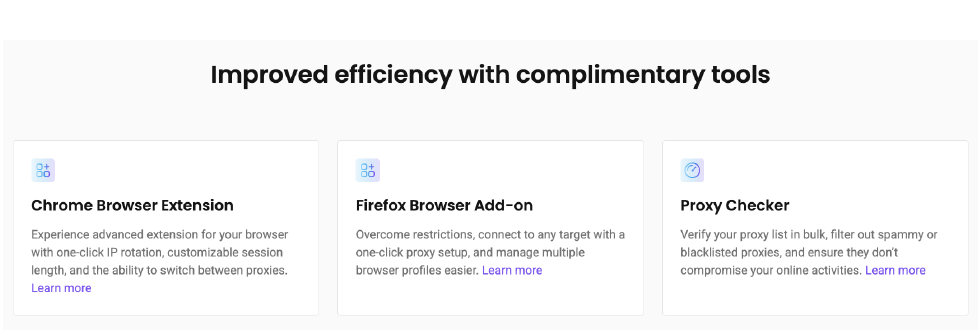
I do not think auxiliary tools are “nice to have” in this category. They are part of the real product. When I see a provider offer a browser extension, a Firefox add-on, and a proxy checker, I do not just see marketing padding. I see signs that the merchant understands how people actually work with proxies when they are switching endpoints, checking quality, and moving between configurations.
Decodo scores well here. The complementary tools I reviewed fit the core proxy workflow instead of competing with it. That matters because the difference between a usable proxy platform and an annoying one is often the amount of setup friction surrounding the proxies themselves. If I can validate, switch, and inspect more quickly, the service becomes more valuable even if the raw IP pool stayed identical.
This is one of the less glamorous reasons I still rate Decodo strongly. The brand does not just sell access. It sells a more complete operating environment than many low-cost proxy pages do.
Who I Think Should Use Decodo
If I had to map the ideal Decodo buyer, it would look like this:
- Someone starting with residential proxies but wanting room to expand into mobile, ISP, or datacenter products later.
- A solo operator or small team that values self-serve controls and a cleaner interface over bargain-basement pricing.
- A buyer who expects to test, iterate, and scale instead of making one huge commitment on day one.
- A user who cares about location strategy and session behavior, not just about whether an IP technically works.
I also think Decodo is a good fit for readers who are still getting comfortable with proxy product distinctions. If you need a refresher on proxy categories before buying, my advice is to pair this review with All Types of Proxies: A Complete Overview and, if ISP proxies are on your shortlist, Best ISP Proxies 2026: Static Residential Proxies.
Who Should Probably Skip It
Decodo is not my automatic recommendation for every budget or workflow. I would probably look elsewhere first if:
- Your only priority is the cheapest possible datacenter IP pack.
- You want a hyper-specialized merchant focused on a single niche instead of a broader platform.
- You already know you do not need residential depth, mobile coverage, or flexible scaling paths.
- You want a review built around hard benchmark tables rather than platform-fit analysis, because that is not how I framed this article.
That is not a weakness so much as a positioning reality. Decodo makes more sense as a polished, capable generalist than as a one-dimensional budget play.
Pros and Cons
Pros
- Residential proxies remain the strongest part of the platform and still look highly competitive.
- The product catalog is broad enough to support multi-stage buying instead of forcing vendor-hopping.
- Pricing ladders are visible and usable, especially on residential and mobile pages.
- Companion tools improve the operational experience instead of feeling like unrelated upsells.
- The rebrand has not broken the continuity that made Smartproxy widely recognized in the first place.
Cons
- Decodo is not the cheapest answer in every category, especially for raw datacenter bargain shopping.
- Promo treatment can make “the real price” feel more fluid than ideal.
- Buyers still need basic product knowledge to choose intelligently between residential, mobile, ISP, and datacenter offers.
- I would still want hands-on testing in a live workflow before treating any provider, including Decodo, as a guaranteed fit.
Discount Codes Worth Testing
Based on the reference packet I used for this review, these are the Decodo coupon codes I would test first:
- DECODO5 for 5% off residential proxies.
- DECODO for 10% off Decodo products more broadly.
I am keeping this recommendation practical rather than absolute. Coupon availability changes, and I never assume a proxy promo code is permanent unless the merchant is actively surfacing it in a current official offer. Test the codes at checkout instead of taking any third-party list at face value.
FAQ
Is Decodo the same company as Smartproxy?
Yes. In practical buying terms, I treat Decodo as the current brand identity for the former Smartproxy merchant line, not as a separate unrelated vendor.
What is the best Decodo product for most buyers?
If I had to pick one starting point, I would choose residential proxies first. That is still the most mature-looking part of the platform and the easiest part of the pricing ladder to justify.
Is Decodo cheap?
I would call it competitively priced in premium self-serve segments, especially on residential plans, but not universally cheap. There are lower-cost options in some categories if price alone is your only filter.
Does Decodo make sense for beginners?
Yes, as long as the buyer is willing to learn the difference between residential, mobile, ISP, and datacenter products. The platform is more approachable than many alternatives, but product fit still matters.
What should I read next before buying?
If you are still narrowing the use case, I would read How to Set Up a Proxy in Windows 10 for setup context and All Types of Proxies: A Complete Overview for product-type context.
My Final Verdict
After reviewing Decodo's current public materials in detail, I still see it as one of the better-rounded proxy providers on the market. The residential line remains the anchor. The mobile line looks credible and premium. Datacenter and ISP options give the platform more range than one-product proxy brands can offer. And the supporting tools make the whole system feel more usable in practice.
I would not pitch Decodo as the universal top pick for every buyer. That would be lazy. What I will say is that Decodo continues to make a strong case for anyone who wants a polished self-serve platform, reasonable scaling paths, and a product catalog that can grow with changing workflows. In that lane, I think it still deserves serious attention.
If you want my bottom line in plain English, it is this: Decodo is still one of the safer shortlist choices in the proxy market in 2026, especially if your first priority is a capable residential proxy platform with enough depth to remain useful after the initial trial phase.
Pricing note: I reviewed Decodo materials on June 1, 2026. Pricing, discounts, and offer packaging can change quickly, so verify the final checkout details on the official site before making a purchase.
Official pages I reviewed while updating this article: Decodo homepage, residential pricing, mobile pricing, datacenter pricing, and ISP pricing.
:%20Pricing,%20Features,%20and%20My%20Verdict)